A million plastic bottles a minute

Just got an idea.

Why don't they throw all this rubbish into some active volcanoes? There are always some that are in a full swing.

Seems volcanoes would be the perfect place to dump all of our rubbish, old tires, plastics, or just about anything, instead of just burying it all...

...
 
Seems volcanoes would be the perfect place to dump all of our rubbish, old tires, plastics, or just about anything, instead of just burying it all...

...

Yeah, we only need to turn bulldozers into helicopters.

... the only downside is finding cheap way to airlift millions of tons of rubbish.

I was just joking. I think its still better to recycle this stuff, because we can't keep taking it out of Earth without putting it back. Particularly metals, like aluminium and iron.
 

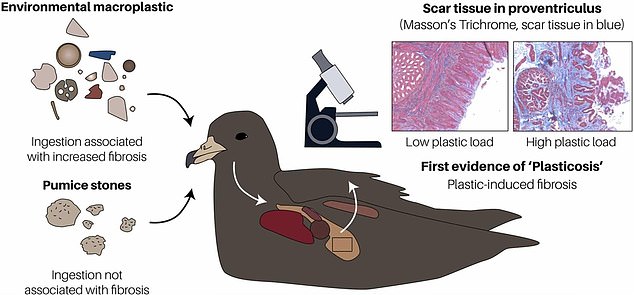
The plastic crisis has spawned a new DISEASE in seabirds: Scientists say 'plasticosis' is caused by small pieces of rubbish which inflame the digestive tract

Birds that died after eating large amounts of plastic were found to have scarring in the first part of their stomach and 'deformed' intestines.

Scientists have called the new disease 'plasticosis', and believe it is caused by small pieces of plastic inflaming the digestive tract.

Young birds also have the disease, thanks to their parents feeding them plastic.

Dr Alex Bond, who co-authored the study and is Principal Curator and Curator in Charge of Birds at the Natural History Museum, said: 'While these birds can look healthy on the outside, they're not doing well on the inside.'

Dr Bond and Dr Jennifer Lavers studied 30 Flesh-footed Shearwaters from Australia's Lord Howe Island to look at the relationship between levels of ingested plastic and the proventriculus organ – the first part of a bird's stomach.

Across the different birds examined during the study, the researchers found that scarring of the first part of the stomach was widespread.

Birds that had ingested more plastic had higher levels of scarring, leading the team to characterise the new disease.

Over time, the persistent inflammation causes tissues to become scarred and deformed, with the knock-on effects including digestion, growth and survival issues.

The disease can lead to the gradual breakdown of tubular glands in the stomach.

Losing these glands can cause the birds to become more vulnerable to infection and parasites and affect their ability to digest food and absorb some vitamins.

The researchers found that other inorganic items in the birds' guts, such as pumice stones, do not contribute to such scarring.

Birds eat stones to help grind food further back in the second part of their stomach, the gizzard.

The authors said the disease is a fibrosis – causing fibrous scarring in the stomach – in a similar way to asbestosis, caused by asbestos, and silicosis, caused by silica dust which affect the lungs.


(More on the link)

68299877-11816463-image-a-22_1677846515769.jpg


.
 
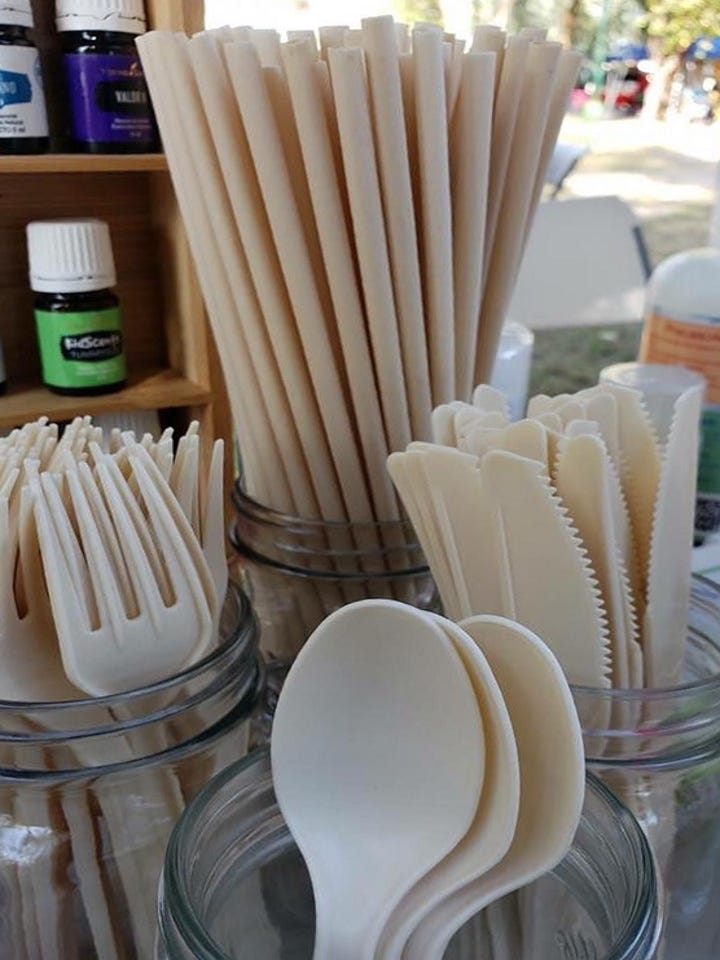
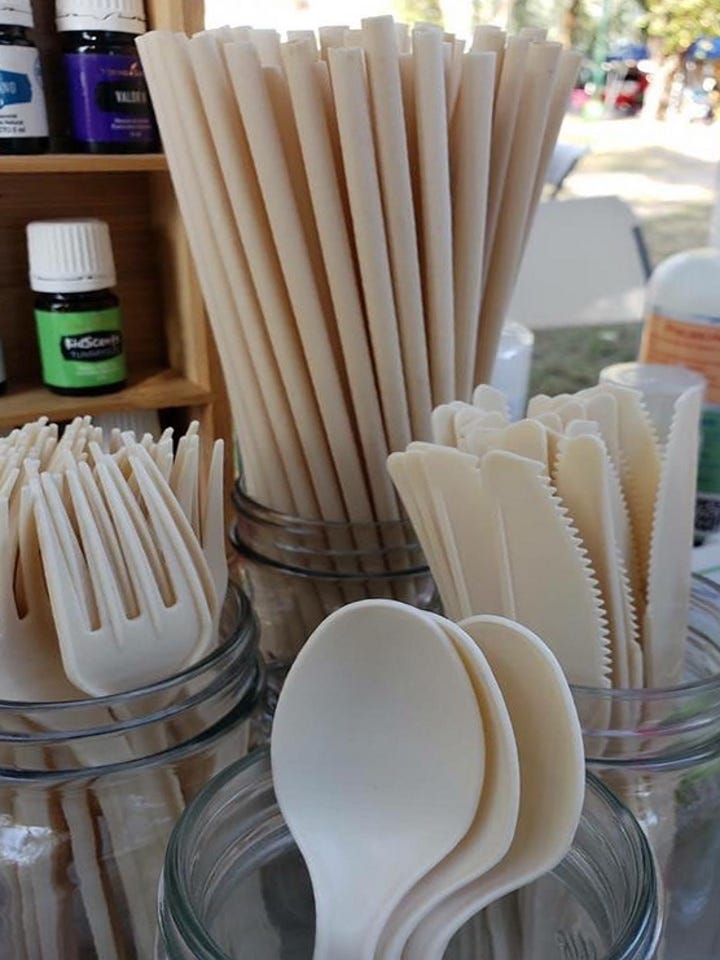
Bioplastics made from avocado pits that completely biodegrade in 240 days created by Biofase, a Mexican chemical engineering company.

MORE


.
 
I can't find the article but I read something the other day about a company in Mexico City that has found a way to make plastic-y stuff out of a renewable material, maybe plant based. They were showcasing the single use forks knives and spoons that we all throw away unused and will go straight to Hell for.
 
I can't find the article but I read something the other day about a company in Mexico City that has found a way to make plastic-y stuff out of a renewable material, maybe plant based. They were showcasing the single use forks knives and spoons that we all throw away unused and will go straight to Hell for.

Here it is:

Bioplastics made from avocado pits that completely biodegrade in 240 days created by Biofase, a Mexican chemical engineering company.

MORE


.

.
 

Average bottle of water contains 240,000 pieces of cancer-causing nanoplastics - 100 times more than previously thought

Bottles of plastic water contain hundreds of thousands of toxic microscopic plastic particles, new research has found. The findings are likely to shock anyone who has swapped from tap to bottled water, believing it was better for their health.

Drinking water from a bottle could mean you are contaminating your body with tiny bits of plastic, which scientists fear can accumulate in your vital organs with unknown health implications.

Nanoplastics have already been linked to cancer, fertility problems and birth defects.

Scientists using the most advanced laser scanning techniques found an average of 240,000 plastic particles in a one-liter bottle of water, compared to 5.5 per one liter of tap water.

University of Columbia researchers tested three popular brands of bottled water sold in the United States – and, using lasers, analyzed the plastic particles they contained down to just 100 nanometers in size.

The particles – nanoplastics - are much smaller than the microplastics previously detected in bottled water.

However, the particles are considered potentially toxic because they are so small that they can enter directly into blood cells and the brain.

These microscopic particles carry phthalates — chemicals that make plastics more durable, flexible, and lasting longer.

Phthalate exposure is attributed to 100,000 premature deaths in the US each year. The chemicals are known to interfere with hormone production in the body.

They are 'linked with developmental, reproductive, brain, immune, and other problems', according to the National Institute of Environmental Health Sciences.

The highest estimates found 370,000 particles.


(More on the link)

.
 

Microplastics found in overwhelming majority of American meat, water, plants

A new study finds that the overwhelming majority of protein foods such as meat and fish are contaminated with microplastics.

The comprehensive study, conducted by researchers at the nonprofit Ocean Conservancy, found that approximately 88% of protein samples tested contained microplastic particles.

"Highly processed products contained the most microplastics per gram," the study said in its findings.

The samples were differentiated into 16 types, such as beef, chicken, seafood, pork, tofu and plant-based food products.

Microplastic particles were discovered across all 16 sample types.

"Maximum U.S. adult exposure from these proteins is ∼3.8 million microplastics/year," the study reports. "Mean U.S. adult exposure from consuming these proteins is >11,000 microplastics/year."

Among the tested samples, approximately 44% of the microplastics found were in the form of fibers.

An additional third of the particles were in the form of plastic fragments.


(More on the link)

.
 

The big recyclable plastic lie EXPOSED: Major plastic producers have known for decades that recycling products was neither economically or practically possible

Big Oil companies and plastic producers have known for more than 30 years that recycling is not a permanent solution, a new report has claimed.

The left-leaning Center for Climate Integrity (CCI) found that companies including Exxon Chemical, and the Society of the Plastics Industry (SPI) have misled the public about recycling to avoid regulatory action and revenue losses.

The report claimed that the plastic industry has been aware that certain plastics are impossible to repurpose, but are mixed in with those that can, making sorting difficult and expensive.

While the companies are said to have known about recycling was not economically or technically feasible, they have continued to push recycling in marketing campaigns that still exist today.

However, industry insiders have been sounding the alarm for decades, saying plastic recycling is 'uneconomical' and that it 'cannot go on indefinitely,' according to newly surfaced documents featured in the report.

Big Oil and plastics companies lied when they told consumers that recycling is feasible, report claims

CCI used existing research and internal documents from APC staffers, which are said to suggest that the plastics and petrochemical industries were aware of the recycling obstacles and how plastic impacts our planet.

Richard Wiles, CCI President, said: 'This evidence shows that many of the same fossil fuel companies that knew and lied for decades about how their products cause climate change have also known and lied to the public about plastic recycling.


(More on the link)

.
 
One small thing everyone can do that is easy and will add-up — even though it might seem insignificant, is start using the Ocean Hero Search Engine.


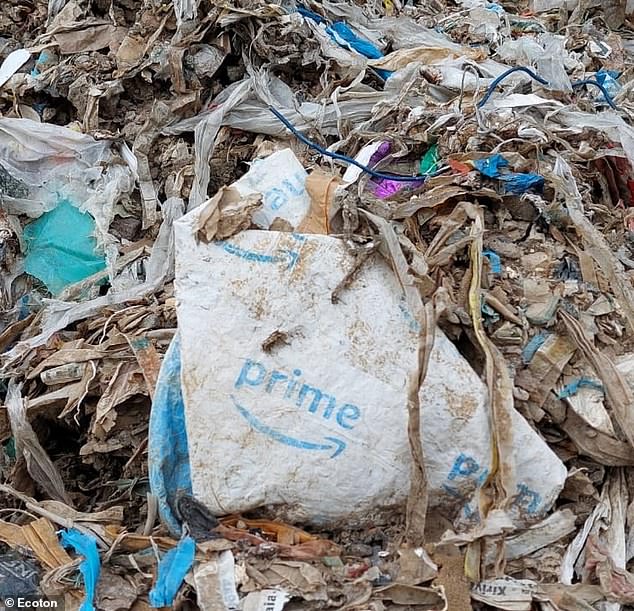
Over 700million pounds of Amazon's 'recyclable' plastic packaging is dumped into environment each year - where chemicals infest livestock, human organs and even clouds

It's the environmental disaster hiding in plain sight - a new report finds that Amazon's 'recyclable' plastic packaging generates 709 million pounds of waste each year.

And nearly all of that tonnage — equivalent in weight to three aircraft carriers — threatens to degrade into ever tinier and more dangerous micro- and nano-plastics.

In recent years, scientists have made repeated, terrifying discoveries on the invisible seepage of microplastics into all facets of life on Earth, linking it to cancer, cell death, heart disease, Alzheimer's and Parkinson's.

The plastic waste created by the e-commerce giant, by itself, is enough to circle the Earth more than 800 times, a figure that doesn't include Amazon's many millions of tons of cardboard nor any of its unrecyclable packaging plastics.

Adding insult to injury, the new report found Amazon's so-called 'recyclable' plastic requires customers to drive their waste packaging to special 'store drop-off locations where plastic film is accepted.'

Given customer expectations of Amazon's door-to-door convenience, less than five percent of that plastic, tracked by the new study, ever makes it to a recycling center.

The new report, from US Public Interest Research Group, found that much of Amazon's so-called 'recyclable' plastic requires customers to drive their waste packaging to special 'store drop-off locations where plastic film is accepted'


'We conducted an investigation into the effectiveness of the store drop-off system used by Amazon for recycling their plastic film packaging,' Jenn Engstrom, an author of the new report and director of California branch of the US Public Interest Research Group (PIRG), explained.

'[PIRG] staff and volunteers placed small tracking devices, mainly Apple AirTags, in 93 bundles of Amazon plastic bags, bubble-lined plastic bags, and air pillows, and put them in store drop bins across the country to see where they ended up.'

Even for this packaging delivered to one of Amazon's designated drop-off points, including Target stores, only four in 93 of the plastics made it to a recycling center.

'We found no evidence that Amazon packaging is being widely recycled,' Engstrom and her co-author Celeste Meiffren-Swango from Environment Oregon concluded.


(More on the link)

.
 
This is a huge problem, we have completely contaminated our planet deeply with plastic, microplastics, I think moreso than any other creation of ours...We are eating it, sleeping on it, wearing it, much of what we touch, smell, and see is plastic...If we go out into the forest away from cities and towns there is plastic in some form all around, whether in larger pieces such as discarded wrappers or bottles or microplastics which are too small to see with the naked eye...We (civilization as a whole) are choking this planet with plastic and there is no sign of any major effort to cease making more plastic...In fact we have been increasing production of plastic and our worldwide industries increase, seems very few people in the world are aware of nor care what is happening in regards to plastic...

...

Each week we swallow a credit card-worth of plastic particles. Here's what they're REALLY doing to your body, and how to avoid them

Would you like a side-order of plastic with your meal? The chances are it will come with one anyway.

The number of microscopic plastic particles that have found their way into our environment is so numerous that virtually any food that you choose to eat – fresh or frozen, precooked or raw - is likely to contain them.

But you won't spot them in your food – or feel them as you swallow.

These tiny particles are known as microplastics - sized from 5mm down to 0.0001mm, or nanoplastics, which are anything smaller than that.

Each week we swallow about 5g of plastic particles, the weight of a credit card - according to a review of data from 50 studies, published in 2019 by scientists at the University of Newcastle in Australia.

Over a year this adds up to 260g, or half a pound.

Researchers are now urgently trying to find ways to limit the amount absorbed into our bodies (for steps you can take, see below) as science starts to uncover the consequences this contamination may be having for our health - and, apocalyptic as it might sound, for the future of mankind.

For just this week scientists have reported finding microplastics in men's testicles. Researchers, led by Professor Xiaozhong Yu at the University of New Mexico in the US, examined testes from human post-mortems as well from animals.

Professor Yu said: 'At the beginning, I doubted whether microplastics could penetrate the reproductive system. When I first received the results for dogs I was surprised. I was even more surprised when I received the results for humans.'

Researchers have suggested microplastics might help explain declining sperm counts in men.

While the full picture of the damage these particles may cause is yet to emerge, the evidence is mounting.

Last month, for example, a study by the same university, published in the journal Environmental Health Perspectives, found that the microplastics from our food can invade our bloodstream, liver, kidneys, even our brain.

A few weeks earlier the New England Journal of Medicine reported that having microplastics and nanoplastics in your arteries may significantly raise the risk of developing cardiovascular problems.

This was based on an analysis of patients with fatty deposits called plaques in their arteries - those whose plaques contained microscopic plastic particles were more than four times more likely than normal to have a heart attack or stroke in the ensuing three years.

Meanwhile in April neurosurgeons in China, writing in the journal Toxicology, warned that microplastics and nanoplastics can get past our brain's natural defence against infection – the 'blood-brain barrier', a normally formidable barrier that usually keeps dangerous substances from entering the brain – and disrupting vital functions such as the way our brain cells work.

The previous month another group of researchers in China reported that in lab studies on mice, the presence of microplastics in the brain appears to accelerate the progression of early dementia symptoms – called mild cognitive impairment – into full-blown Alzheimer's disease.

In all these studies the damage results from the microplastics sparking harmful levels of chronic inflammation in the body as our immune system tries to fight off these synthetic invaders.

Microplastics could have a longer-term impact on us all: in 2021 a study in the Journal of Hazardous Materials found that male mice fed microplastics subsequently became infertile – inflammation appeared to have affected the sperm-producing cells in the testes - and the report warned the same effect may be seen in humans.

'Unfortunately we can't avoid exposure to microplastics,' Nina Schrank, head of plastics at Greenpeace UK, told Good Health. This is because plastics break down throughout the environment, and thus can enter the food chain through water, soil, feed and even the air.

So what, if anything, can we do to protect ourselves against the plastic plague?

While the researchers behind last month's study in the journal Environmental Health Perspectives are looking at the impact on animals of a high-cholesterol/high-fat diet, or high-fibre diet (to see if diet affects the uptake of microplastics into our body), what can we do right now?

Fortunately, scientists are beginning to suggest some useful answers...

Wash your rice
Unlikely as it might sound, rice can be ridden with microplastics, according to a study by the University of Queensland.

Lead researcher and epidemiologist Dr Jake O'Brien warned in the Journal of Hazardous Materials that for every 100g (half a cup) serving of rice we eat, we consume on average 3mg-4mg of plastic. On average, this means we each may swallow around 1g per person annually via eating rice alone.

If we consume instant (i.e. pre-cooked) rice, this figure leaps considerably, his research found in 2021.

Dr O'Brien says: 'A significant result was the levels of plastics found in pre-cooked or instant rice, as it was four times higher than in uncooked rice, averaging 13mg per serving.'

Much of this is down to the way that rice is packaged and processed, during which time it comes into contact with myriad plastics that can rub onto the grains.

This, Dr O'Brien adds, means we can significantly reduce the microplastic content of rice simply by rinsing it thoroughly first.

'We found that washing rice before cooking reduced plastics contamination by up to 40 per cent,' he says.

Watch out for wine with plastic corks
Stick with old-fashioned corks if you want to avoid microplastics in your tipple, advised researchers in the journal Food Chemistry in 2020.

Corks went out of fashion because buyers feared that they tainted wine, leaving it 'corked'.

But researchers at the University of Aveiro in Portugal found that 24 of the 26 bottles of white wine with polyethylene stoppers they tested contained significantly high levels of microplastics, which the investigators said had migrated from the plastic corks.

Choose fresh food, rather than processed
Highly processed protein products such as fish sticks, chicken nuggets, tofu and plant-based burgers contain significantly more microplastics than minimally processed products such as wild-caught fish and raw chicken breast, researchers reported in the journal Environmental Pollution in February.

Ecologists at the University of Toronto in Canada analysed more than a dozen different types of popular store-bought proteins including seafood, pork, beef, chicken, tofu and several plant-based meat alternatives.

They found that some highly processed protein products, such as breaded shrimp, fish sticks and chicken nuggets, appear to contain significantly more microplastic particles than minimally processed samples.

They said this suggests that food processing could be a source of plastic contamination.

This resonates with previous research, in the journal Environment International in 2019, which found that consumption of ultraprocessed foods such as hamburgers, ready-to-eat convenience meals, oven chips, ice cream and fizzy drinks is associated with higher levels of microplastics in the body.

The study of urine samples from more than 2,000 adults and children, led by epidemiologists at the Johns Hopkins Bloomberg School of Public Health, Baltimore, warned that the microplastics they found were high in phthalates.

The investigators warned that these chemicals are known hormone-disruptors associated with 'wide-ranging adverse health outcomes', which include obesity, diabetes and reproductive problems.

What's more, the researchers found levels of phthalate microplastics were highest in children.

It warned that, 'children who are more vulnerable to toxicants and tend to consume more ultra-processed food than adults'.

It also added that microplastic contamination may 'contribute to adverse health effects of ultra-processed food', which include obesity and diabetes.

...and focus more on veg
While fruit and veg should underpin any healthy diet, you may want to eat more of some than others.

Food hygiene scientists at the University of Catania in Italy found that, overall, fruits contain significantly higher levels of microplastics than veg - of all the produce they surveyed in a 2020 study, lettuce had the lowest level of microplastic contamination.

The scientists suggest that fruit absorb more microplastics generally because it absorbs more water, which carries the plastics, and also because the trees that bear fruit live for years in soil from which they draw plastic pollution.

By contrast, they said, vegetables live in soil for only weeks or months.

This is echoed by research from 2020 in the journal Nature Nanotechnology, where scientists found that nanoplastics accumulate in crops through water being absorbed by the root systems.

Choose tea bags with care
Steeping a plastic tea bag at a brewing temperature of 95c releases around 11.6 billion microplastics and 3.1 billion nanoplastics into a single cup, according to a 2019 study from McGill University in Canada, published in the journal Environmental Science & Technology.

The levels of microparticles released from the tea bag packaging are several times higher than plastic levels found in most other foods, the researchers said.

The simplest way to avoid this is to buy loose-leaf tea (preferably in non-plastic packaging) or choose biodegradeable tea bags.

Think twice about plastic bottled water
You might think it obvious to avoid plastic bottles of water, but this is a compelling reason why: a standard half-litre plastic bottle of water can contain an average of 120,000 plastic particles from seven different types of plastic, researchers from Columbia University warned earlier this year.

Using highly accurate lab technology, they found that bottled water sold in shops can contain up to 100 times more bits of plastic than previously estimated.

About 90 per cent of the particles they found are nanoplastics - so small they can only be seen using spectroscopy, which detects the wavelengths of light that nanoplastics reflect in the water.

Nanoplastics' microscopic dimensions make them all the more dangerous, wrote the researchers in the journal Proceedings of the National Academy of Sciences.

This is because at 1,000th the average width of a human hair, nanoplastics can migrate through the tissues of the digestive tract or lungs into the bloodstream and into our cells.

The reason for bottled water's high-plastic content is explained in a report by an international collaboration of experts in the journal Environmental Health in 2020.

They said that heat used in bottle-processing, combined with long storage times, which can be up to two years, enable high levels of microplastics to migrate from the packaging into the water.

Exposure to microplastics is almost three times higher in people who rely on using plastic water bottles than alternative containers, reported a 2019 study in the journal Environmental Science and Technology by researchers at the University of Victoria, British Columbia, in Canada.

The simplest solution is instead of buying water in plastic bottles – or refilling old ones with tap water, equip yourself with a glass or stainless-steel bottle that you can keep topped up.

Professor Richard Thompson, a plastics pollution expert at the University of Plymouth, told Good Health: 'Single-use items such as plastic bottles are where I would most suggest that people reduce their consumption. It's better for people and for the environment.'

Don't overdo the shellfish
Available study evidence about plastic levels in the flesh of fish generally points to the fact that fish can contain significant levels of microplastics that they consume from their environments and foods, so ubiquitous is plastic pollution in the planet's waters.

Even molluscs, especially mussels and oysters, are affected, according to researchers at the University of Barcelona in 2023.

As much as 85 per cent of mussels and 53 per cent of oysters they examined had ingested microplastics. They suggested that such high levels are often the result of the creatures living in river estuaries, where they ingest plastic pollutants from both river and sea.

Check your kitchen and stove ware
In only three minutes of microwaving, plastic containers can release as many as 4.22 million microplastic and 2.11 billion nanoplastic particles into food from just one square centimetre of plastic, according to environmental engineers at the University of Nebraska-Lincoln in the US.

The researchers, writing in the journal Environmental Science & Technology last year, warned that this is particularly concerning when heating baby food.

The same study found that storing food in plastic containers for more than six months, either in the fridge or at room temperature, can also release millions, even billions, of microplastics and nanoplastics into the contents.

So switch to glass, ceramic or metal containers.

Even simply covering plated food with a ceramic plate or microwave-safe glass lid will radically reduce plastic-particle exposure compared with microwaving it in a plastic container.

It's a similar story with cookware, said researchers at Plymouth University, in the journal Science of The Total Environment last month.

They warned that using cookware containing plastic 'results in significant increases in microplastic contamination'.

Numerous studies show that non-stick coated cookware may be a problem, as it can potentially develop cracks in the coating and release plastic particles.

.
 
Back
Top